Todo dia é uma despedida (2018)
Em colaboração com Pedro Geraldo
Vídeo. 60’, cor, stereo.
Em colaboração com Pedro Geraldo
Vídeo. 60’, cor, stereo.
Everyday we say goodbye (2018)
In collaboration with Pedro Geraldo
Video, 60', color, stereo
In collaboration with Pedro Geraldo
Video, 60', color, stereo
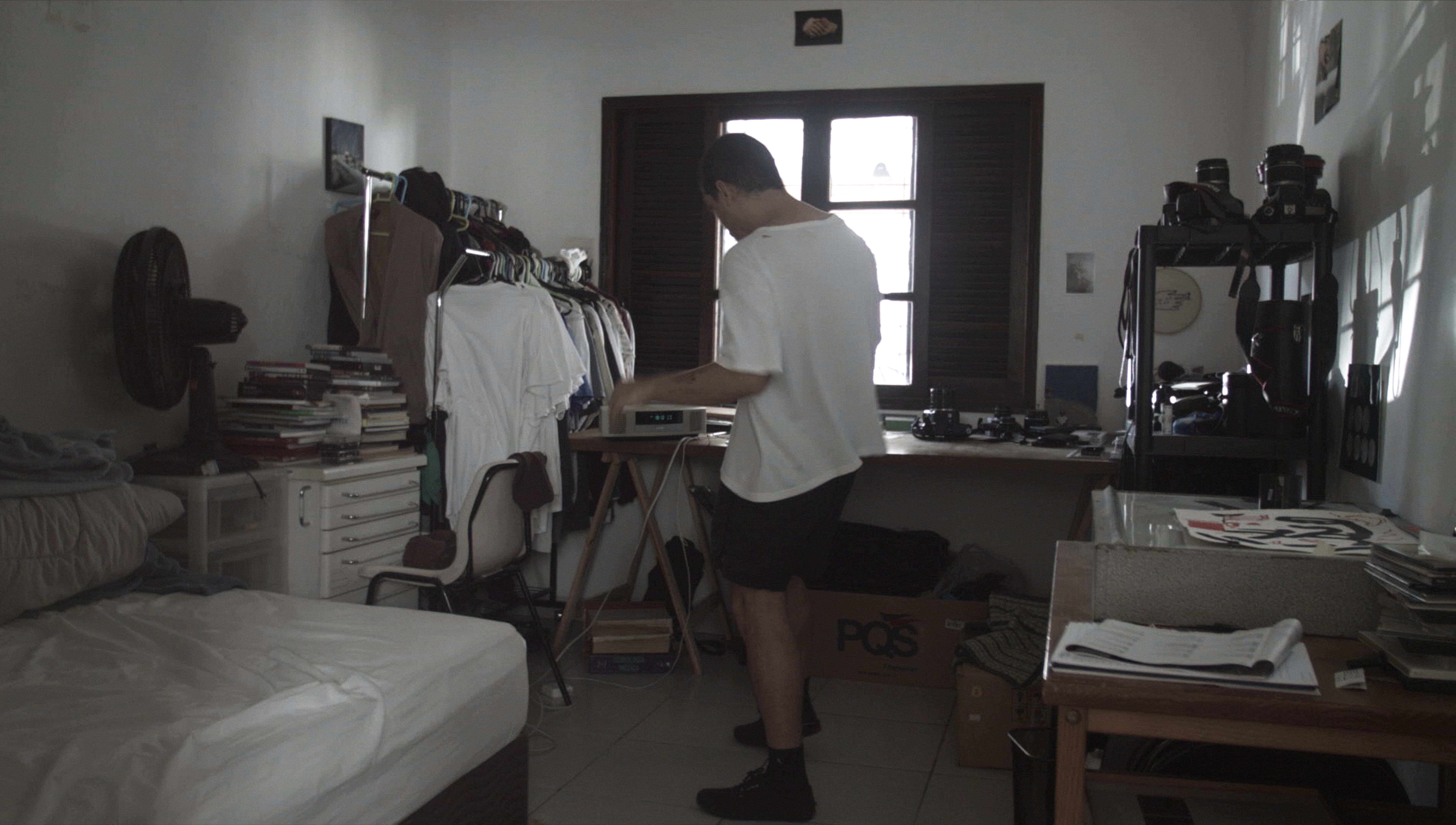
Peço para o meu melhor amigue dançar em frente à nossa câmera durante um tempo indetermidado. Elu está indo embora para outro país e eu quero guardar um pedaço delu que dure pra sempre.
Enquanto o observo dançando eu percebo que elu não dança como antes, que aquele novo jeito de dançar é diferente do que eu me lembrava e queria guardar. Mas eu guardei um novo jeito delu de se mexer, que é como ele existiu nesse dia e hora que estivemos juntos.
Eu estou presente na cena. Pedro me faz presente quando me dirige um olhar, uma risada, uma pergunta. Eu me faço presente na maneira como escolho enquadra-lo, mostrando a totalidade do seu corpo e do seu quarto. O fora de quadro, o contra-plano do filme sou eu sentada atrás da câmera observando-o com o olhar fixo, sem olhar pro visor da câmera, e um sorriso no rosto tentando guardar seus movimentos na memória enquanto a câmera guarda no cartão. Tentando me lembrar dos momentos que passamos juntos, de como ele dançava antes, de como eu gostaria de repetir esse filme daqui 50 anos com ele. Imaginei elu velinhe dançando, ou não dançando. Como será Pedro daqui 50 anos? Eu quis entrar em cena e dançar com elu.
Esse filme foi filmado poucos dias antes delu partir para outro país. A câmera tenta repetir a função do meu olho. Mas ninguem pode ver o que eu vi. Ninguem pode ver o que eu vejo quando assisto Pedro dançando.
Enquanto o observo dançando eu percebo que elu não dança como antes, que aquele novo jeito de dançar é diferente do que eu me lembrava e queria guardar. Mas eu guardei um novo jeito delu de se mexer, que é como ele existiu nesse dia e hora que estivemos juntos.
Eu estou presente na cena. Pedro me faz presente quando me dirige um olhar, uma risada, uma pergunta. Eu me faço presente na maneira como escolho enquadra-lo, mostrando a totalidade do seu corpo e do seu quarto. O fora de quadro, o contra-plano do filme sou eu sentada atrás da câmera observando-o com o olhar fixo, sem olhar pro visor da câmera, e um sorriso no rosto tentando guardar seus movimentos na memória enquanto a câmera guarda no cartão. Tentando me lembrar dos momentos que passamos juntos, de como ele dançava antes, de como eu gostaria de repetir esse filme daqui 50 anos com ele. Imaginei elu velinhe dançando, ou não dançando. Como será Pedro daqui 50 anos? Eu quis entrar em cena e dançar com elu.
Esse filme foi filmado poucos dias antes delu partir para outro país. A câmera tenta repetir a função do meu olho. Mas ninguem pode ver o que eu vi. Ninguem pode ver o que eu vejo quando assisto Pedro dançando.
I ask my best friend to dance in front of our camera for an undetermined amount of time. He’s moving to another country, and I want to keep a piece of they that will last forever.
As I watch they dance, I realize he doesn’t dance the way he used to—that this new way of moving is different from what I remembered and wanted to preserve. But I recorded a new version of how he moves, the way he existed on that specific day and hour we spent together.
I am present in the scene. Pedro makes me present when he looks at me, laughs, or asks me a question. I make myself present in the way I choose to frame them—showing his entire body and his room. The off-screen space, the reverse shot of the film, is me sitting behind the camera, eyes fixed on him, with a smile on my face, trying to store his movements in my memory while the camera records them to the memory card. Trying to remember the moments we shared, how he used to dance, and how I’d love to remake this film with him fifty years from now. I imagined him old, dancing—or not dancing. What will Pedro be like fifty years from now?
I wanted to step into the frame and dance with them.
This was filmed a few days before theyr departure to another country. The camera tries to mimic the function of my eye. But no one can see what I saw. No one can see what I see when I watch Pedro dancing.
As I watch they dance, I realize he doesn’t dance the way he used to—that this new way of moving is different from what I remembered and wanted to preserve. But I recorded a new version of how he moves, the way he existed on that specific day and hour we spent together.
I am present in the scene. Pedro makes me present when he looks at me, laughs, or asks me a question. I make myself present in the way I choose to frame them—showing his entire body and his room. The off-screen space, the reverse shot of the film, is me sitting behind the camera, eyes fixed on him, with a smile on my face, trying to store his movements in my memory while the camera records them to the memory card. Trying to remember the moments we shared, how he used to dance, and how I’d love to remake this film with him fifty years from now. I imagined him old, dancing—or not dancing. What will Pedro be like fifty years from now?
I wanted to step into the frame and dance with them.
This was filmed a few days before theyr departure to another country. The camera tries to mimic the function of my eye. But no one can see what I saw. No one can see what I see when I watch Pedro dancing.