Caverna Fantasma, 2025
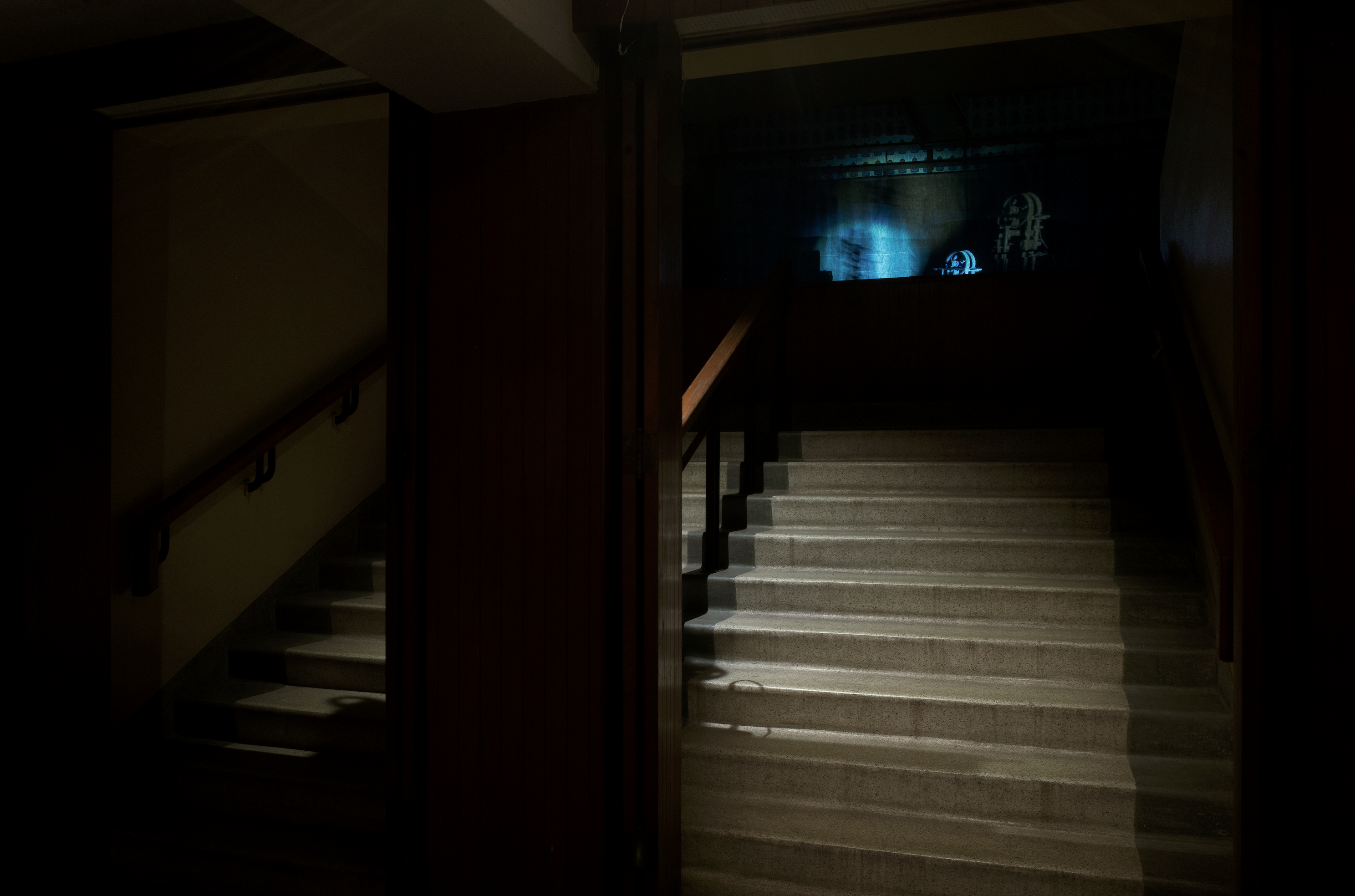
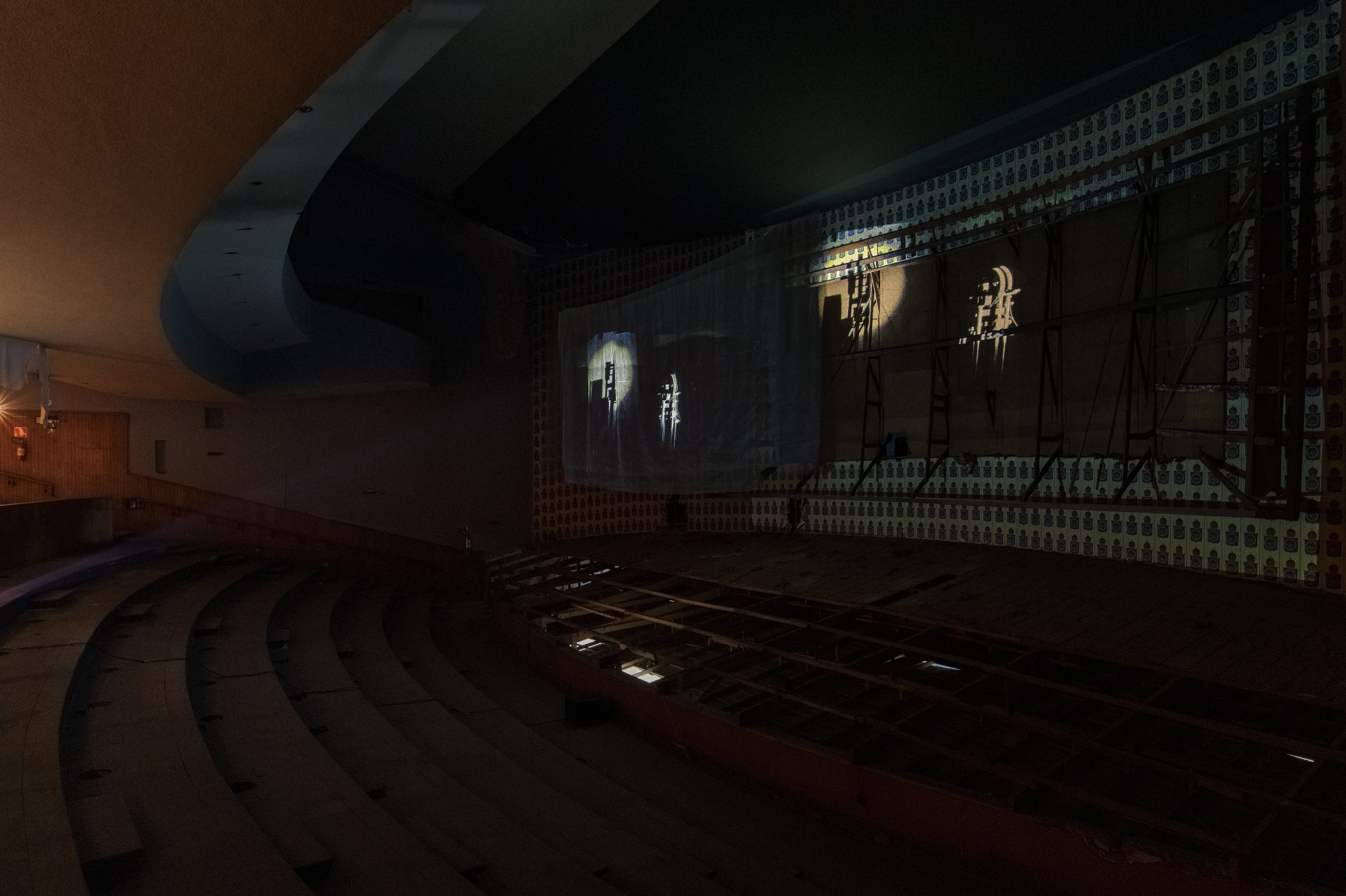
Projeção de filme em canal único, filmado inteiramente no antigo Cine Paissandu e projetado de volta na antiga sala de exibição através de duas camadas suspensas de tela de mosquiteiro cinza, tensionadas por cabos de nylon transparentes.
4K, 23 min, colorido, estéreo, em loop.
Projeção de filme em canal único, filmado inteiramente no antigo Cine Paissandu e projetado de volta na antiga sala de exibição através de duas camadas suspensas de tela de mosquiteiro cinza, tensionadas por cabos de nylon transparentes.
4K, 23 min, colorido, estéreo, em loop.
Phantom Cave, 2025
Single-channel film projection filmed entirely within the former Cine Paissandu and projected back onto the old screening room through two suspended layers of grey mosquito netting stretched with transparent nylon cables.
4K, 23 min, color, stereo, loop.
Single-channel film projection filmed entirely within the former Cine Paissandu and projected back onto the old screening room through two suspended layers of grey mosquito netting stretched with transparent nylon cables.
4K, 23 min, color, stereo, loop.

Símbolo do auge cinematográfico paulistano na década de 1950, o Cine Paissandu, patrimônio histórico da cidade e um dos importantes espaços de circulação de filmes, reabre suas portas, após mais de 20 anos de fechamento, para receber uma ativação artística pelas mãos da artista Manoela Cezar. A partir de 16 de agosto, o público poderá conferir a exibição de duas videoinstalações site-specific inéditas: “Caverna Fantasma” e “Paissandú Drive In”. As obras dialogam com as duas salas que compõem o antigo cinema: uma delas hoje convertida em estacionamento, e a outra, fechada nas últimas duas décadas, será reaberta ao público especialmente para esta ocasião.
Estabelecido na região central da capital paulista, que reunia uma grande concentração de cinemas e era conhecida como Cinelândia Paulistana, o Cine Paissandu manteve-se ativo até os anos 1970, quando a queda de público levou à divisão do espaço em duas salas menores. Neste contexto, foi tombado na década de 1990, junto com o tombamento do Vale do Anhangabaú, e funcionou como cinema e bingo até o encerramento de suas atividades, no início dos anos 2000.
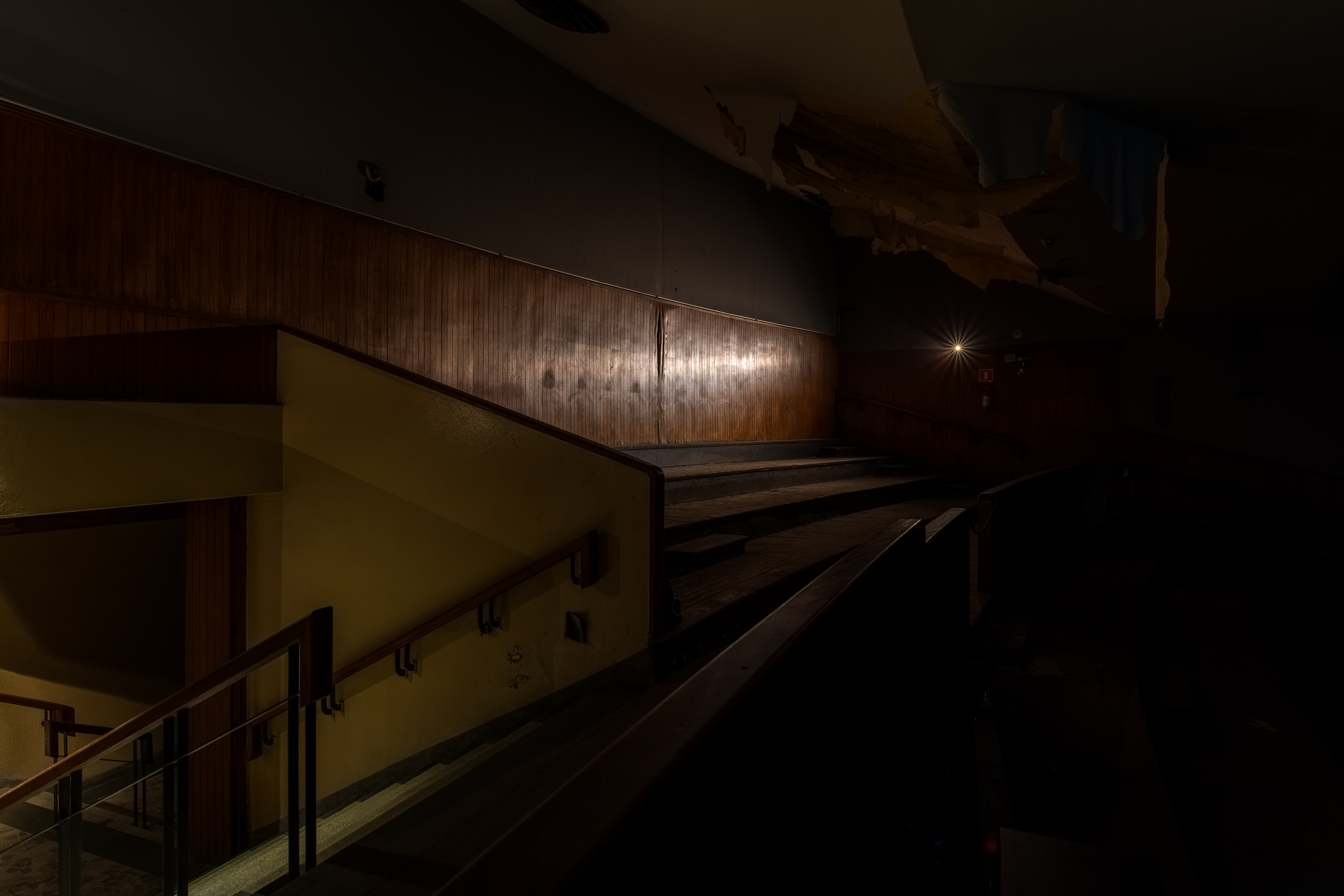
“O Cine Paissandu é o foco deste trabalho justamente por sua característica única de sobreposição temporal – um espaço estagnado, impedido de se transformar por completo devido à própria demanda, abandonada, de preservação. O trabalho tenta entender essas contradições e construir a partir delas. Por isso, habitar o espaço foi tão importante quanto registrá-lo: pensar no que se põe em movimento ao permitir a circulação novamente e ao projetar luz em uma sala que permaneceu 20 anos no escuro”, afirma Cezar.
Nos últimos seis meses, Manoela Cezar transformou o Cine Paissandu em seu ateliê. A partir da convivência direta com a arquitetura e os vestígios do local, a artista desenvolveu uma série de trabalhos fotográficos, audiovisuais, com projeções e gravuras, que dialogam intimamente com os aspectos históricos e simbólicos do antigo cinema. A abertura da mostra marca a reocupação do espaço, devolvendo-o de certa forma ao seu público original – aquele para quem ele foi verdadeiramente projetado.
Trecho do press release por Tabula Comunicação.
Estabelecido na região central da capital paulista, que reunia uma grande concentração de cinemas e era conhecida como Cinelândia Paulistana, o Cine Paissandu manteve-se ativo até os anos 1970, quando a queda de público levou à divisão do espaço em duas salas menores. Neste contexto, foi tombado na década de 1990, junto com o tombamento do Vale do Anhangabaú, e funcionou como cinema e bingo até o encerramento de suas atividades, no início dos anos 2000.
“O Cine Paissandu é o foco deste trabalho justamente por sua característica única de sobreposição temporal – um espaço estagnado, impedido de se transformar por completo devido à própria demanda, abandonada, de preservação. O trabalho tenta entender essas contradições e construir a partir delas. Por isso, habitar o espaço foi tão importante quanto registrá-lo: pensar no que se põe em movimento ao permitir a circulação novamente e ao projetar luz em uma sala que permaneceu 20 anos no escuro”, afirma Cezar.
Nos últimos seis meses, Manoela Cezar transformou o Cine Paissandu em seu ateliê. A partir da convivência direta com a arquitetura e os vestígios do local, a artista desenvolveu uma série de trabalhos fotográficos, audiovisuais, com projeções e gravuras, que dialogam intimamente com os aspectos históricos e simbólicos do antigo cinema. A abertura da mostra marca a reocupação do espaço, devolvendo-o de certa forma ao seu público original – aquele para quem ele foi verdadeiramente projetado.
Trecho do press release por Tabula Comunicação.
A symbol of São Paulo’s cinematic heyday in the 1950s, Cine Paissandú, a historical landmark of the city and one of the most important venues for film distribution, reopens its doors after more than 20 years of closure to host an artistic activation by artist Manoela Cezar. Starting on August 16, the public will be able to check out two new site-specific video installations: “Caverna Fantasma” (Phantom Cave) and “Paissandú Drive In.” The works interact with the two rooms that make up the old cinema: one of them has now been converted into a parking lot, and the other, which has been closed for the last two decades, will be reopened to the public especially for this occasion.
Located in the central region of the state capital, which had a large concentration of movie theaters and was known as Cinelândia Paulistana, Cine Paissandú remained active until the 1970s, when declining attendance led to the division of the space into two smaller theaters. In this context, it was listed in the 1990s, along with the listing of Vale do Anhangabaú, and functioned as a cinema and bingo hall until it closed in the early 2000s.
Cine Paissandú is the focus of this work precisely because of its unique characteristic of temporal overlap—a stagnant space, prevented from completely transforming due to the very demand for preservation that has been abandoned. The work attempts to understand these contradictions and build on them. “That is why inhabiting the space was as important as recording it: thinking about what is set in motion by allowing circulation again and projecting light into a room that has remained in darkness for 20 years,” says Cezar.
Over the past six months, Manoela Cezar has transformed Cine Paissandú into her studio. From her direct experience with the architecture and vestiges of the place, the artist has developed a series of photographic and audiovisual works, with projections and engravings, which dialogue intimately with the historical and symbolic aspects of the old cinema. The opening of the exhibition marks the reoccupation of the space, returning it in a way to its original audience—those for whom it was truly designed.
Excerpt from the press release by Tabula Comunicação.
Located in the central region of the state capital, which had a large concentration of movie theaters and was known as Cinelândia Paulistana, Cine Paissandú remained active until the 1970s, when declining attendance led to the division of the space into two smaller theaters. In this context, it was listed in the 1990s, along with the listing of Vale do Anhangabaú, and functioned as a cinema and bingo hall until it closed in the early 2000s.
Cine Paissandú is the focus of this work precisely because of its unique characteristic of temporal overlap—a stagnant space, prevented from completely transforming due to the very demand for preservation that has been abandoned. The work attempts to understand these contradictions and build on them. “That is why inhabiting the space was as important as recording it: thinking about what is set in motion by allowing circulation again and projecting light into a room that has remained in darkness for 20 years,” says Cezar.
Over the past six months, Manoela Cezar has transformed Cine Paissandú into her studio. From her direct experience with the architecture and vestiges of the place, the artist has developed a series of photographic and audiovisual works, with projections and engravings, which dialogue intimately with the historical and symbolic aspects of the old cinema. The opening of the exhibition marks the reoccupation of the space, returning it in a way to its original audience—those for whom it was truly designed.
Excerpt from the press release by Tabula Comunicação.



Photos: Julia Thompson